Make a track
Acid bassline patterns: 6 lines to program (and a generator)
An acid bassline is a 16-step pattern where accents and slides do most of the work. Below are 6 patterns written out note by note, from a one-note groove to a rolling 16th line, in C minor. You can program them in AC 303, the free 303-style bass in EASY RAVE, or press its RANDOM key to generate a new line in key.
How do you read these patterns?
Every pattern is one bar of 16 steps. Each step is a 16th note, and every group of 4 is one beat.
- NOTE is the pitch. A dot is a rest and an arrow means "hold the note before".
- ACCENT (A) makes that note louder and opens the filter further.
- SLIDE (S) glides from that note into the next one.
All 6 are in C minor. In the AC 303 piano roll, D# is the same note as E flat and A# is B flat. To play them in another key, change ROOT and SCALE at the top of EASY RAVE before you start (music scales for beginners explains the choices), or move them with the ♭ and ♯ buttons, which shift the notes one step along the scale.
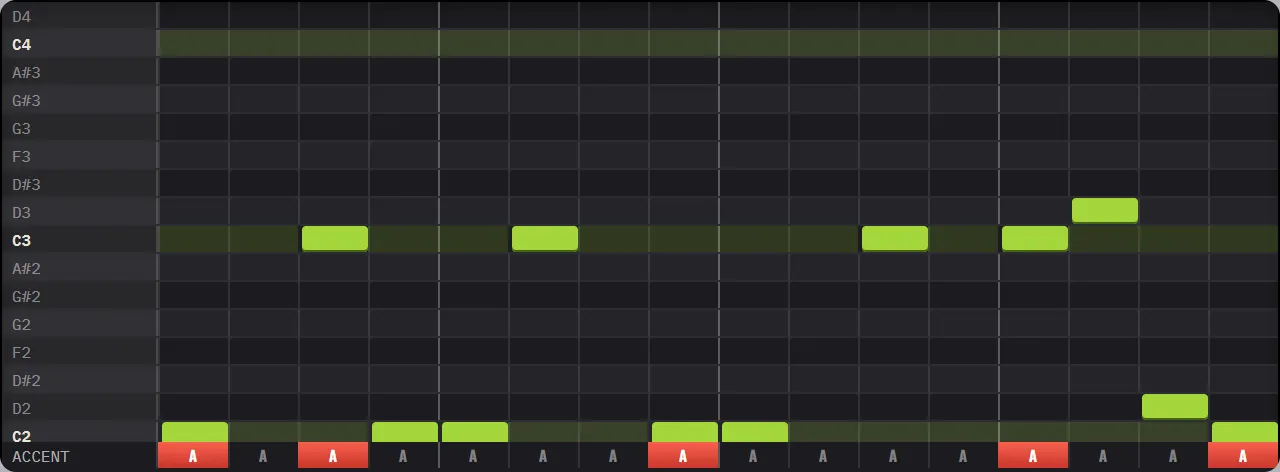
1. The one-note groove
One note, three octave jumps
| 1 | 2 | 3 | 4 | 5 | 6 | 7 | 8 | 9 | 10 | 11 | 12 | 13 | 14 | 15 | 16 | |
|---|---|---|---|---|---|---|---|---|---|---|---|---|---|---|---|---|
| NOTE | C2 | C2 | C3 | C2 | C2 | C3 | C2 | C2 | C2 | C3 | C2 | C2 | ||||
| ACCENT | A | A | A | A | A | |||||||||||
| SLIDE | S | S | S |
Almost everything is the same note. The groove comes from where the accents fall and from the 3 slides, which make the line swoop between octaves. If you only learn one acid trick, learn this one: rhythm and slides first, melody later.
2. Octave bounce
Root and octave, walking down the scale
| 1 | 2 | 3 | 4 | 5 | 6 | 7 | 8 | 9 | 10 | 11 | 12 | 13 | 14 | 15 | 16 | |
|---|---|---|---|---|---|---|---|---|---|---|---|---|---|---|---|---|
| NOTE | C2 | C3 | C2 | C3 | C2 | C3 | C2 | C3 | D#2 | D#3 | D#2 | D#3 | F2 | F3 | G2 | G3 |
| ACCENT | A | A | A | A | A | |||||||||||
| SLIDE |
Each pair of notes is the same note an octave apart, which makes a busy line feel simple. AC 303 has a preset built on this idea: Octave bounce, in its PRESETS menu.
3. Rolling 16ths that dodge the kick
Rests on the kick, notes in between
| 1 | 2 | 3 | 4 | 5 | 6 | 7 | 8 | 9 | 10 | 11 | 12 | 13 | 14 | 15 | 16 | |
|---|---|---|---|---|---|---|---|---|---|---|---|---|---|---|---|---|
| NOTE | C2 | C3 | C2 | C2 | G2 | C2 | C2 | C3 | C2 | A#2 | G2 | D#2 | ||||
| ACCENT | A | A | A | A | ||||||||||||
| SLIDE | S | S |
Steps 1, 5, 9 and 13 are rests because that is where a four on the floor kick lands. Bass and kick never collide, so both stay punchy. This is the shape behind most techno basslines; see how to make techno.
4. The squelch riff
A minor riff with slides
| 1 | 2 | 3 | 4 | 5 | 6 | 7 | 8 | 9 | 10 | 11 | 12 | 13 | 14 | 15 | 16 | |
|---|---|---|---|---|---|---|---|---|---|---|---|---|---|---|---|---|
| NOTE | C2 | D#2 | C2 | G2 | F2 | D#2 | C2 | C3 | A#2 | G2 | F2 | G2 | ||||
| ACCENT | A | A | A | A | A | |||||||||||
| SLIDE | S | S | S | S | S |
A real melody this time, built only from notes of C minor (C, D#, F, G and A#). The slides go mostly between neighbouring notes, so the line smears instead of stepping. Turn RESONANCE up and this one starts to talk.
5. Offbeat acid
Sparse, on the offbeats
| 1 | 2 | 3 | 4 | 5 | 6 | 7 | 8 | 9 | 10 | 11 | 12 | 13 | 14 | 15 | 16 | |
|---|---|---|---|---|---|---|---|---|---|---|---|---|---|---|---|---|
| NOTE | C2 | C3 | C2 | C2 | C3 | D#2 | C2 | |||||||||
| ACCENT | A | A | A | |||||||||||||
| SLIDE | S | S |
Fewer notes, more space. It sits between the kicks like a house bassline, and the slides on steps 3 and 11 give each phrase a little lift. Good for deep, slower acid around 120 BPM.
6. Call and answer
Low question, high answer
| 1 | 2 | 3 | 4 | 5 | 6 | 7 | 8 | 9 | 10 | 11 | 12 | 13 | 14 | 15 | 16 | |
|---|---|---|---|---|---|---|---|---|---|---|---|---|---|---|---|---|
| NOTE | C2 | C2 | C2 | C2 | D#2 | C3 | C3 | A#2 | G2 | F2 | D#2 | |||||
| ACCENT | A | A | A | A | A | A | ||||||||||
| SLIDE | S | S | S | S |
The first half stays low on the root, the second half jumps up and walks back down. Copy this bar with + and change only the last 4 steps of the copy: you get a 2-bar phrase that sounds composed.
How does the RANDOM acid generator work?
AC 303 has a RANDOM key on its tag line. Each press writes a new acid line into the bar you are viewing. It is random within rules that keep it musical:
- the bar always starts on the root note, accented
- most notes are the root, some jump up an octave, and the rest are picked from the current scale
- about a quarter of the steps are left as rests
- accents and slides are scattered at random
Because it reads ROOT and SCALE from the top of the screen, every line it writes is in key with your chords. Press it a few times, keep the one you like, then edit 2 or 3 notes by hand so it becomes yours.
How do you enter these patterns in EASY RAVE?
- Open EASY RAVE and find the AC 303 (BASS) machine.
- Press CLEAR on its sequencer bar to empty the bar.
- Click each note into the piano roll: rows are pitches, columns are steps.
- Click A in the ACCENT lane and S in the SLIDE lane under the notes. If the SLIDE lane is hidden, drag the handle under the roll to make it taller.
- Press play, then turn RESONANCE and CUT OFF FREQ until it squelches.
How to make acid house turns any of these into a full track, and filter cutoff and resonance explains the knobs that make them sound acid.
Frequently asked questions
What notes are used in acid basslines?
Most acid lines use the root note of the key, its octave and a few notes from a minor scale, often the minor third, fifth and minor seventh. The character comes more from accents, slides and filter movement than from the notes themselves.
Is there a free acid bassline generator?
Yes. AC 303 in EASY RAVE has a RANDOM key that writes a new acid line into the current bar, in the key and scale you have chosen, with accents and slides. It runs free in your browser with no download.
What is the difference between a slide and a tie?
A slide glides the pitch from one note into the next without a new attack. A tie, or held note, simply keeps the same note sounding for longer. Acid lines use both, but slides are what make them squelch.